
When "mass-production year" appears, pitch decks often lead with a general-purpose brain: end-to-end learning, cross-scene transfer, and another layer of scale. Capital understands that story; it travels well.
Diligence and contracting ask a different cut:
Is the first customer scene closed-loop written down? Who signs for delay and rework? Or is there only a "brain" story?
One judgment: fundraising may chase the brain; signing and mass production test the delivery core team—scene boundaries, process and supply-chain bottlenecks, on-site acceptance, and external technical interfaces that become falsifiable, retestable organizational accountability. A louder model slogan does not fill the signature line in the annex.
The common failure is twisting two ledgers into one: pitch platform valuation language, then hire as if "a few more people who train models" will close the deal—people arrive, nobody owns customer-site cadence, and the contract still cannot name scene KPIs.
- 1) Split the two ledgers
Ledger A · Fundraising narrative (brain / platform)
What it solves: general capability, cross-scene upside, platform imagination.
Typical moves: end-to-end learning narrative, transfer claims, scale and lab demos, valuation language.
Hiring impulse: stack more "LLM / embodied brain" headcount—often before the first scene is written.
Ledger B · Signing and volume (delivery core team)
What it solves: move one scene from prototype to retestable small batch, with someone accountable for customer acceptance.
Typical moves: scene boundary and out-of-scope, sense—decide—act—feedback on one acceptance chain, prototype / small-batch / volume milestones, BOM and process bottlenecks, on-site or remote delivery cadence, customer-side interface and compliance language.
Talent need: scene closed-loop ops, productization, systems delivery, customer-site interface—not one more résumé that "can train models."
Both ledgers can coexist; the risk is substituting A for B—pitch the brain, then fail to write scene KPIs and owners into the contract annex.
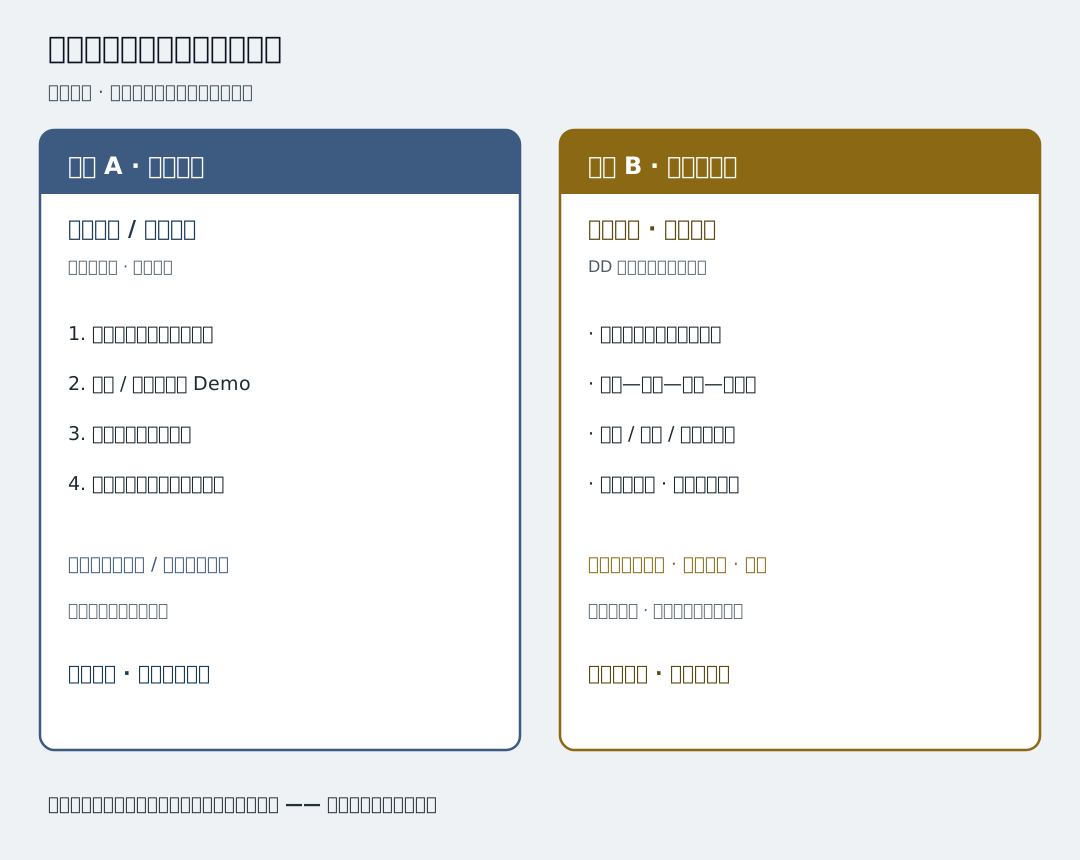
Once split, the talent implication is clear: strong engineering is not the same as strong external delivery. Many Chinese embodied teams are thick on R&D and body engineering, thin on external delivery and scene owners—heat rewards the former's story; signing rewards whether the latter can sign.
- 2) The first answer sheet before "mass production": what DD actually asks
"Mass production" is not an adjective on a fundraising page. Diligence and contracting keep asking whether you can show this answer sheet (illustrative, not a scorecard):
- 1. Scene boundary: which scene is first delivery (line takt, warehouse pick, inspection loop…)? Is out-of-scope written?
- 2. Closed-loop evidence: sense—decide—act—feedback on one acceptance chain, or only demo slices and edits?
- 3. Milestone language: prototype / small batch / volume—what retestable metrics, who signs, is a retest protocol pre-written?
- 4. Supply chain and process: bottleneck in body, actuators, labeling, or on-site deploy and line interface—any named owner?
- 5. External interface: who faces customer, channel, compliance? Can advisor theater replace a diligencable delivery number-one?
- 6. Failure attribution: when delayed, cut scope, headcount, or narrative? Is a stop-loss gate pre-written?
Clear answers on 1–3 earn putting "mass production" into the operating plan; answering only "we have a stronger brain" rarely ends diligence there—they want numbers and signers in the annex, not the next parameter slide.
At this stage, what is often missing is people who can run the customer site and are willing to sign, plus clear scene and milestone language—not a hiring list stuffed with "general brain" roles from day one.
- 3) Delivery core team: enable volume-side capabilities on demand, not as a slogan kit
When a team truly enters small-batch delivery, customer acceptance, or turns research into a sellable scene capability, read delivery-side seats by capability type (non-identifiable persons):
- Scene closed-loop ops → set boundaries, own cadence, cut scope
- Productization → fold demos into retestable versions and release rhythm
- Systems delivery / integration → body, sensing, control, site interface on one acceptance chain
- Process and supply-chain interface → BOM, actuators, line bottlenecks have owners
- Customer-side external interface → acceptance language, retest protocol, compliance can be diligenced
- Safety and on-site governance → human–robot co-presence, data and external language have gates
These seats are expensive, hard to book, often start as advisory or project-based—and valuable for signing and volume. Treating them as default headcount for the word "embodied," or covering them only with "LLM engineer" lists, leads to wrong hires, wrong use, and failed acceptance.
Read the supply side on the delivery ledger too: lab labels do not equal customer delivery cadence; people who can write an acceptance annex sit closer to volume deals; advisors probe gaps and do not replace the number-one who must sign the contract; write overseas remote vs domestic on-site division early—embodied sites usually need on-site and interface accountability more than pure software.
- 4) Six industry mismatches
- 1. Platform narrative covering scene KPIs
Pitch "general transfer" and "end-to-end," yet the first customer's acceptance annex cannot name three retestable numbers. Capital may buy a story; contracts buy numbers and signature lines. Ask first: what are the three numbers in the annex?
- 2. Thick engineering headcount, nobody owns site cadence
Body and algorithm teams can be strong while nobody owns on-site, remote, or interface cadence at the customer line or warehouse. Everyone is busy when delayed; the accountability seat is empty. Ask first: who owns each of the three site interfaces?
- 3. Busy advisor theater, no signing delivery owner on contract
Expert sessions and roadmap reviews stack up; delay and rework still find no contractual owner. Advisors probe gaps; they do not replace the delivery number-one. Ask first: whose name is on the rework signature line?
- 4. Writing "general transfer" as this-quarter must-hit
Cross-scene capability can be a long-term direction; writing this quarter's operating goal as "already general" burns headcount and customer trust together. Ask first: which one scene closed-loop does this quarter protect?
- 5. Hiring list stuffed with "LLM / embodied brain"
If the gap is productization, systems delivery, and customer interface, more people who train models still will not close the loop. Ask first: is the gap training depth, or delivery-organization thickness?
- 6. Treating overheard capability sketches as a bookable pipeline
Material experience and unverified willingness or engagement form are not a matchable pipe. Authorization, willingness, engagement form verified?—verification is still not a start-date promise.
- 5) Five self-checks (ledger first, people second)
- 1. In the last 90 days, can at least one customer scene show closed-loop evidence (retestable results on one acceptance chain—not demo slices)?
- 2. If you signed tomorrow, could the acceptance annex name scene boundary, milestones, retest protocol, and signer?
- 3. Last quarter, when delayed or reworked, did accountability land on a contractually nameable delivery seat?
- 4. Are "can build models / bodies" headcount far above "can run the customer site and are willing to sign"?
- 5. Over the next 90 days, are you thickening the brain narrative, or the delivery organization?
If Q1–2 are unclear yet you expand "brain" hiring: pause and write the scene closed-loop and signing chain. If Q1–2 are clear and you enter small-batch / customer acceptance: do a ~30-minute talent-side gap alignment—match a delivery core team, not the slogan "embodied."
- 6) aipat.dev boundary
We help with diagnose → match → contracting assist for hard-tech / embodied teams already (or clearly about to) run acceptable delivery: productization, systems delivery, scene and customer-side interface seats.
- Still on fundraising narrative: prioritize scene and acceptance language; we can also help judge whether those seats are premature.
- Need a delivery core team: align seat gaps first, then anonymized capability summaries and matching.
- We do not sell talent-pool headcount, treat capability narratives as bookable pipelines, give investment advice, or substitute for customer-site delivery itself.
Unsure which ledger you are on? Book ~30 minutes via https://aipat.dev/
contact@aipat.dev
Closing
Embodied heat will keep rewarding "brain" narratives; signable and shippable volume reward another capability set—scene closed-loop plus a delivery organization that can sign.
Capital may chase the brain story; DD and signing test the delivery core team. Split ledgers first, then match people.
Disclaimer: industry method observation for alignment only—not an offer to any person or institution, and not investment, legal, or employment advice. Structural judgments are not a promise of introducible names or start dates; engagement follows written scope and mutual confirmation.
aipat.dev · International elite technical talent & patent commercialization